 Skip-the-line available
 What You See Climbing the Towers of Notre-Dame
Step by step up the 424 stairs — the chimeras gallery, the great bell and the rooftop view over Paris and the rebuilt spire.
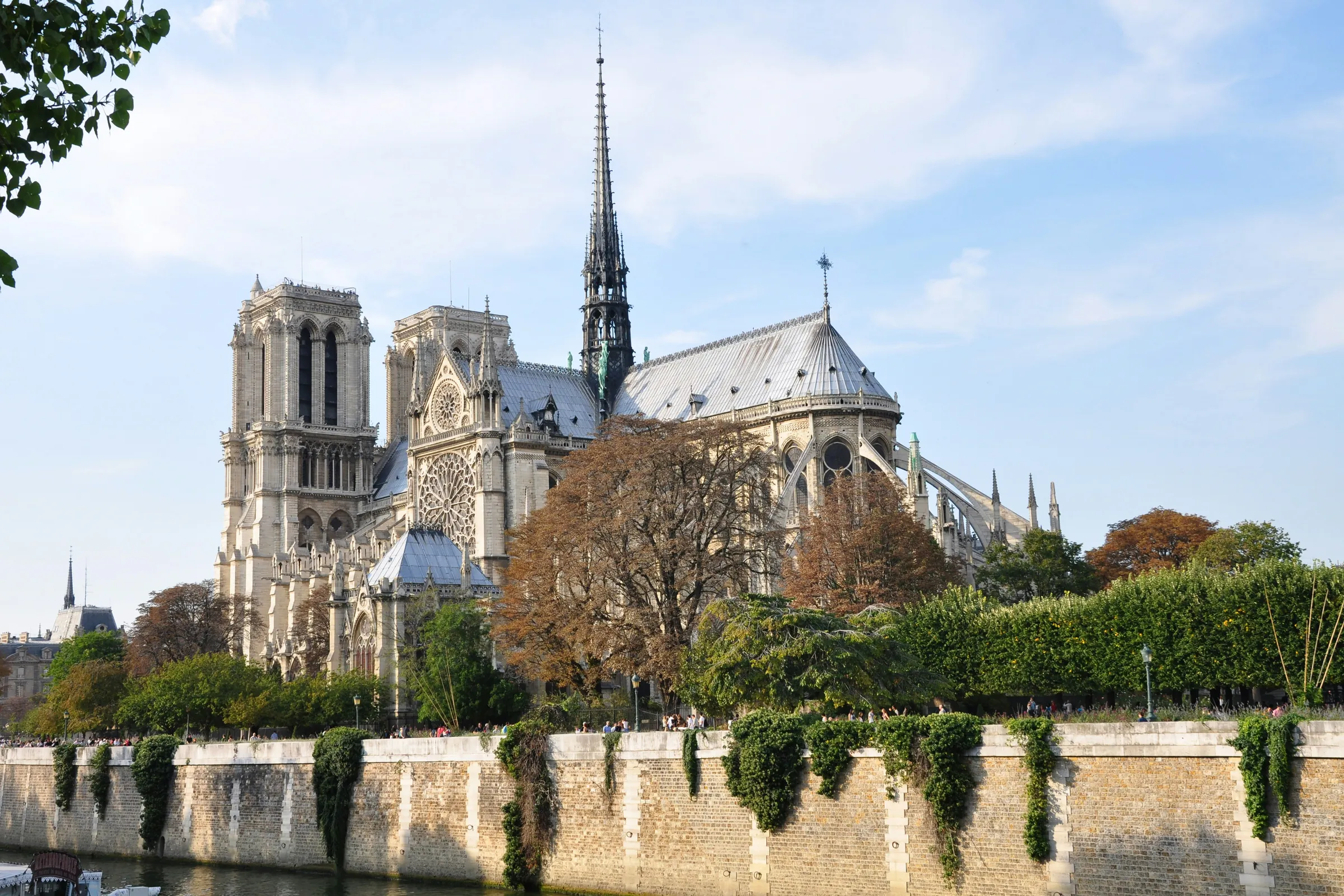
The tower climb packs a great deal into 424 steps: a medieval spiral staircase, the most famous gargoyles in the world, a colossal historic bell and a rooftop view like no other in Paris. This guide walks you through the route in order, so you know what is coming, where the highlights are and how to make the most of a climb that is as much an experience of the cathedral's fabric as it is a route to a viewpoint.
The Staircase and the Ascent
The climb starts in the North Tower, up a tight stone spiral staircase worn smooth by centuries. There is no lift: the 424 steps are the only way up and down, and some upper passages are narrow — around 45 centimetres — and low enough to make you stoop. The enclosed, winding ascent builds anticipation, with occasional glimpses out through openings, before it delivers you to the level of the galleries between the towers.
It is a physical climb, but a steady pace with a pause or two makes it very manageable for anyone reasonably fit. Wear comfortable, sure-footed shoes, and take it slowly on the narrow sections. The effort is part of the point: you arrive among the gargoyles and bells having climbed through the living stone of the cathedral, which is a very different feeling from stepping out of a lift.
The Galerie des Chimères
The first great reward is the Galerie des Chimères, the gallery running between the two towers, lined with the brooding stone grotesques that have become emblems of Paris. The most famous is the Stryge, the winged, horned creature resting its chin on its hands and gazing out over the city with an expression of eternal boredom. These figures feel medieval but were in fact designed in the 19th century by the restorer Viollet-le-Duc, who reinvented the towers' decoration during his great restoration of the cathedral.
This is the most photographed point of the climb, and rightly so: framing the rooftops of Paris between the wings and horns of a chimera is one of the iconic images of the city. Take your time here — the gallery is the atmospheric heart of the tower visit, and each grotesque has its own character. From here you also get your first proper sense of the height and the sweep of the view to come.
The Great Bell
Continuing into the South Tower, the route brings you to the bourdon 'Emmanuel', the cathedral's largest and most venerable bell. Cast in the 17th century and weighing many tonnes, it is famous for the deep, pure note that has marked the most solemn moments of French history, and it survived the 2019 fire unharmed. Seeing it up close, in the dim of the belfry, conveys the sheer scale and craft of the cathedral's fabric in a way the view alone cannot.
The bell chamber is a reminder that the towers are working parts of a living cathedral, not just a viewpoint. From here a final short ascent takes you to the top of the South Tower and the open rooftop, the climax of the climb, where the enclosed world of stairs and stone gives way suddenly to open sky and the whole of Paris.
The Rooftop View and the Spire
At the top, nearly 70 metres up, Paris opens out in every direction: the Seine curving around the Île de la Cité, the roofs of the Latin Quarter and the Marais, the Eiffel Tower, the Panthéon's dome and Sacré-Cœur crowning its hill. It is a lower, more intimate view than the Eiffel Tower's, placing you among the stonework in the medieval heart of the city rather than looking in from the edge — a favourite of many Paris regulars for exactly that reason.
The most memorable sight is closest to hand: looking down onto Notre-Dame's own rebuilt spire and restored roof, recreated after the 2019 fire and seen from an angle hidden from the public throughout the restoration. For anyone who watched the fire and the rebuilding, this close view of the resurrected cathedral is quietly moving, and it is unique to the tower climb — no other vantage in Paris offers it.
Frequently asked
How many steps are there and is there a lift?
There are 424 steps up a narrow spiral staircase, and no lift — the stairs are the only way up and down. Some upper passages are about 45 cm wide and low. It takes most climbers 45 minutes to an hour round trip.
What is the Galerie des Chimères?
The gallery between the two towers, lined with the famous stone grotesques — including the chin-on-hands Stryge — that have become symbols of Paris. They look medieval but were designed in the 19th century by the restorer Viollet-le-Duc. It's the most photographed point of the climb.
Can I see the bells?
Yes — the route in the South Tower passes the bourdon 'Emmanuel', the cathedral's great 17th-century bell, which survived the 2019 fire. Seeing it up close is a highlight of the climb.
What's the view like from the top?
A rooftop panorama over the Seine, the Île de la Cité and all of Paris — the Eiffel Tower, the Panthéon, Sacré-Cœur — plus a close view straight down onto the cathedral's rebuilt spire and roof. It's an intimate, historic view from within the medieval city.
Is it worth it if I'm not very fit?
For most reasonably fit visitors, yes — a steady pace with a pause or two handles the 424 steps well. It is not recommended for heart conditions, strong vertigo, pregnancy, or children under 6, and there is no step-free option.
Can I see the rebuilt spire?
Yes — one of the most striking parts of the view is looking straight down onto the recreated spire and restored roof from the towers, an angle that was hidden from the public throughout the restoration.